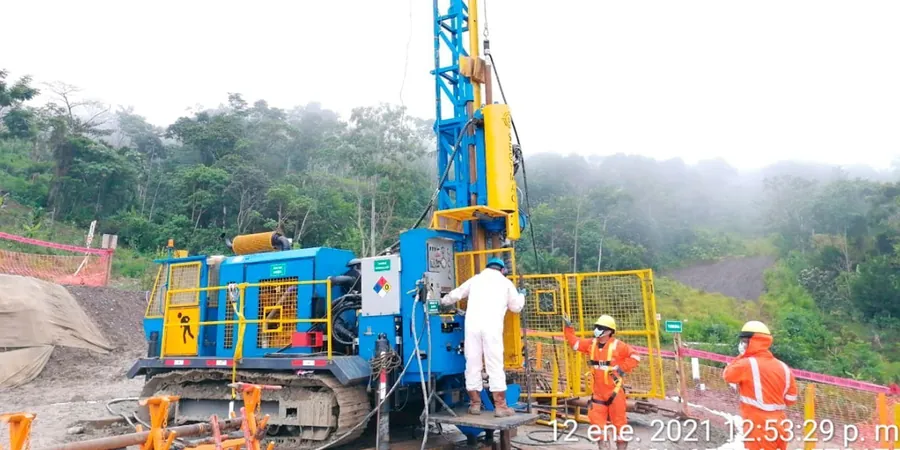
A residential development we consulted on near the Slaney estuary ran into serious trouble. Groundwater kept flooding the excavations for the foundations, turning the site into a slurry pond for weeks. The contractor had skipped the field permeability test, relying on a desktop estimate of soil infiltration. In Wexford, where the subsoil shifts from sandy gravels overlying the Macamores Formation to dense lodgement tills within a few hundred metres, that shortcut is expensive. A Lefranc test in the trial pits would have given them the actual hydraulic conductivity and saved months of delays. Our team runs both Lefranc and Lugeon tests across County Wexford, giving engineers the real numbers they need to design dewatering systems, size soakaways, or assess grout takes in fractured bedrock before the first machine arrives on site. When we combine these results with a grain size analysis from the same borehole, the correlation between soil texture and measured permeability validates the entire drainage model, leaving no room for assumptions that could flood the budget later.
In Wexford's glacial terrain, hydraulic conductivity can shift by three orders of magnitude across 50 metres—one borehole test is never enough.
Local considerations
Wexford town sits on the estuary of the River Slaney, with much of the urban expansion occurring on reclaimed marshland and alluvial soils. The groundwater table here lies barely a metre below ground surface in winter. A building permit submission that lacks site-specific permeability data will often stall at the planning stage, especially for developments requiring a SuDS (Sustainable Drainage System) assessment under the Greater Dublin Strategic Drainage Study principles, which influence local authority requirements across the southeast. The real financial risk, however, emerges during construction. Underestimating inflow means constant pumping, unstable excavation sidewalls, and in the worst cases, hydraulic uplift of the formation that can crack a freshly poured raft foundation. For rock sockets in the Campile Formation shales, ignoring Lugeon testing can lead to specifying the wrong socket length—too short and the pile creeps under load; too long and the piling contractor bills you for unnecessary drilling metres. A day of field permeability testing costs a fraction of a single dewatering pump failure event, and we've seen those failures often enough to know the pattern.
Frequently asked questions
How much does a field permeability test cost in Wexford?
The cost for a Lefranc or Lugeon test in County Wexford typically ranges from €490 to €1000 per test interval, depending on the depth, number of pressure steps, and whether we need to install packers for rock mass testing. A site with three test intervals at different depths usually falls in the higher portion of that range once mobilization, equipment, and reporting are included. We always provide a fixed-price quote after reviewing the borehole logs and site access conditions.
When should I choose a Lugeon test instead of a Lefranc test?
Choose a Lugeon test when you're dealing with fractured rock—the Campile Formation slates, the Bray Group quartzites, or any bedrock where water flow is controlled by joints and fissures rather than pore space. The Lugeon test applies stepped pressures to characterise the fracture network's hydraulic behaviour and gives you a Lugeon value that directly informs grouting requirements and rock socket design. The Lefranc test is for soils and very weathered rock where the flow regime is porous media flow.
How many test intervals do we need for a typical Wexford site?
We recommend a minimum of three test intervals per borehole when the stratigraphy is unknown or variable—which describes most of Wexford's glacial terrain. Testing only at the proposed foundation level misses the permeability of overlying drainage layers and underlying aquifers. For a single house on a sloping site in the Blackstairs foothills, two well-placed intervals can sometimes suffice, but for commercial developments near the Slaney floodplain we typically run five or more to capture the full vertical profile.
How long does a field permeability test take on site?
A single Lefranc test in soil usually takes 45 to 90 minutes once the borehole is prepared. A full Lugeon test with five pressure steps in rock requires about two hours per interval because we need to reach steady-state flow at each pressure. For a typical investigation with three test intervals, expect us to be on site for a full day. We handle all the drilling coordination if you need the borehole advanced as part of our service.