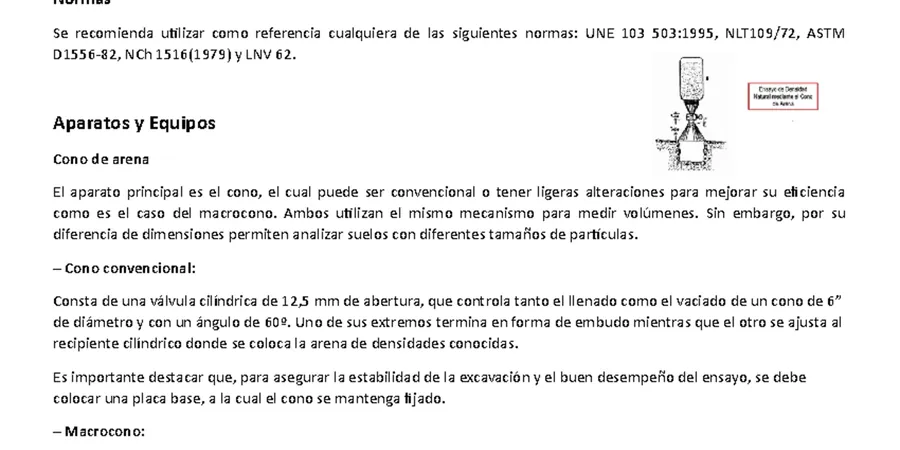
The ground conditions shift noticeably between Wexford's historic quayfront, where centuries of urban fill overlie estuarine silts, and the drumlin ridges north of town where dense glacial tills dominate. On a recent residential project near Clonard, the contractor was surprised by how much the compacted density varied across just 100 metres of the site—the sandy gravel lenses in one corner responded well to compaction while the silty clay patches near the old hedgerow line needed a completely different moisture conditioning approach. This is precisely why field density testing with the sand cone method remains indispensable here. Unlike nuclear gauge readings that require careful calibration for local mineralogy, the sand cone gives you a direct, physical measurement of in-place density that holds up when the subgrade surprises you. For deeper stratigraphic context beneath compacted layers, we often pair the test with test pits to visually confirm the transition into undisturbed natural ground, and when granular materials dominate the specification, a grain size analysis confirms whether the particle distribution actually matches the Proctor reference curve.
A sand cone test measures what the roller actually achieved, not what the moisture-conditioned lab sample predicted—that gap is where most earthworks disputes begin.