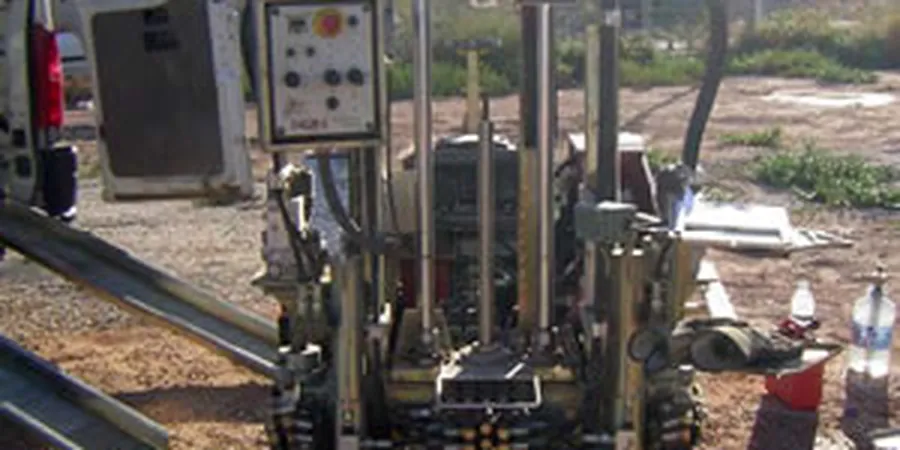
Eurocode 7 requires reliable ground investigation for every project, and in Wexford that means dealing with everything from dense glacial tills to soft alluvial silts along the Slaney. A cone penetration test cuts through the uncertainty. Instead of waiting weeks for lab results from disturbed samples, CPT gives you continuous in-situ data in real time. Our rigs push a calibrated cone into the ground, measuring tip resistance and sleeve friction at every centimetre. For engineers working on the quays or on new housing near Drinagh, combining CPT with a MASW survey often provides the complete picture needed for seismic site class and bearing capacity calculations. It is the fastest path from site investigation to shovel-ready plans.
CPT data lets you design foundations based on what the soil actually is, not what a disturbed sample suggests it might be.
Methodology and scope
A recent project on a site near Wexford Racecourse needed precise settlement estimates for a light industrial slab. The upper 4 metres were soft estuarine clays, and the developer could not afford over-excavation surprises. We ran a 20-tonne CPT rig across six locations in a single morning. The continuous pore pressure readings identified exactly where the clay transitioned into a dense sand layer, allowing the structural engineer to design a ground-bearing slab rather than a more expensive piled solution. This is the kind of practical, cost-saving outcome we target.
The method is clean, quick, and needs no boreholes or spoil removal. It is particularly useful in the tighter urban plots around Wexford town centre, where access for drilling rigs can be a real headache. You get profiles of undrained shear strength, relative density, and soil behaviour type without ever sending a sample to the lab.
Local considerations
A site on the north side of Wexford town, near the reclaimed land by the harbour, will behave very differently from one out in the boulder clay uplands around Barntown. Near the Slaney estuary, you can encounter compressible organic layers at shallow depth; skip proper investigation and differential settlement will crack your slab within two years. Further inland, the glacial till can be dense and overconsolidated, but erratic boulders can fool a standard SPT. CPT picks up these transitions instantly. The biggest risk to your programme is assuming uniform ground. A cone test map with three or four sounding locations shows you exactly where the weak pockets sit, letting you target ground improvement or adjust footing dimensions before the pour.
Frequently asked questions
What does a CPT test cost in Wexford?
For a standard CPT sounding with pore pressure measurement, you can expect to budget between €150 and €260 per test point, depending on depth and access conditions. A typical small site investigation with three soundings and a basic report falls toward the lower end of that range.
How does CPT compare to a traditional borehole?
CPT gives you a continuous profile without disturbing the soil. It is faster and produces no cuttings, which is a big advantage on operational sites. However, it does not retrieve a physical sample, so for certain laboratory tests like Atterberg limits, a complementary test pit or borehole is often paired with the CPT programme.
Can your CPT rig access tight urban sites in Wexford?
Our 20-tonne rig is mounted on tracks and designed for confined access. We regularly work in back gardens and commercial units where a full-sized drilling rig would never fit. If the site has a standard gate width and firm ground, we can usually get onto it without a crane.
What information does a CPT report provide?
You receive a digital log with corrected cone resistance (qt), sleeve friction (fs), and pore pressure (u2) plotted against depth. We also interpret the soil behaviour type using the Robertson chart and provide undrained shear strength and relative density estimates where applicable.