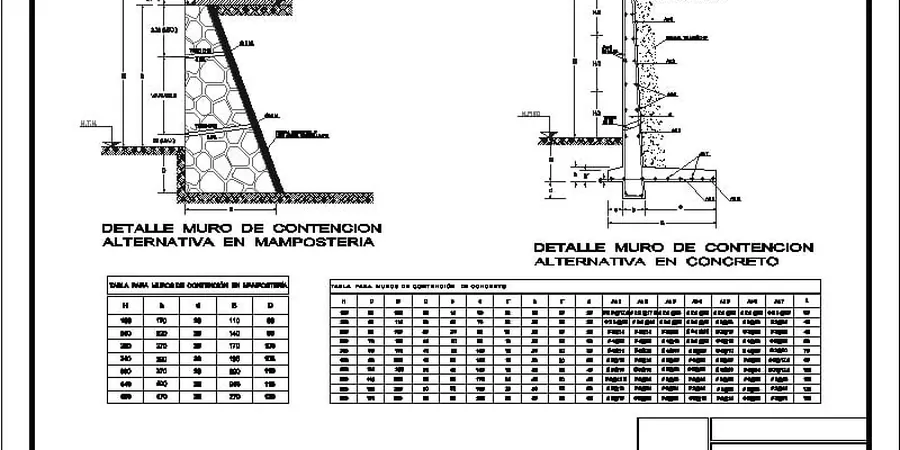
The ground beneath Wexford changes character remarkably over short distances. In the town centre, near the narrow medieval streets and the quay front, you often encounter soft alluvial silts and historic made ground that offer limited bearing capacity. Move a few kilometres west toward the Forth Mountain area, and the soil profile shifts to stiff glacial tills and weathered shale. Designing a retaining wall here means reading the landscape carefully. A solution that works neatly on the boulder clay slopes of Barntown might prove completely inadequate in the estuarine deposits near Ferrybank, where groundwater levels sit just a metre below the surface. Before finalizing any retaining wall design, the team runs a thorough desk study, correlating historical maps with recent site data. We frequently combine early-stage test pits to assess shallow strata with deeper SPT drilling where the wall height exceeds 1.5 metres or where the presence of soft lenses is suspected.
In Wexford’s glacial deposits, effective drainage design is as critical as reinforcement — hydrostatic pressure behind a wall can double the overturning moment overnight.
Local considerations
Wexford’s development pattern has been shaped by its port and its agricultural hinterland. The old town hugs the shoreline, while newer residential estates have gradually climbed the surrounding slopes. This means many retaining walls are now positioned directly above, or below, existing structures built decades ago without modern foundation records. The risk of triggering a slope movement during excavation is real, particularly where the weathered shale interface dips toward the cut. We assess global stability for every wall over 1.2 metres using limit equilibrium methods, modelling the stratigraphy obtained from borehole logs. In the Piercestown and Murntown areas, where housing has expanded onto former farmland, we have mapped a consistent layer of soft clay at depths between 2.5 and 4 metres. A cantilever wall founded above that layer without a shear key can rotate imperceptibly over two or three wet winters, eventually causing serviceability cracking in adjacent pavements. Our slope stability analysis integrates the retaining structure into the broader hillside model, rather than treating it in isolation.
Frequently asked questions
Do I need planning permission for a retaining wall in Wexford?
Under the Planning and Development Regulations 2001, walls exceeding 1.2 metres in height bounding a public road, or 2 metres elsewhere, generally require planning permission. Exemptions may apply to certain agricultural works, but we always recommend checking with Wexford County Council’s planning department before proceeding. Our design drawings include the level of detail typically requested for a Section 5 declaration.
How long does the design process take for a typical residential retaining wall?
For a straightforward cantilever wall up to 2 metres high, where site investigation data is already available, we can deliver a design package within two to three weeks. If new boreholes or trial pits are needed, the programme extends by the time required for fieldwork and laboratory testing, typically adding two to four weeks depending on soil complexity.
What budget range should I expect for retaining wall design in the Wexford area?
Design fees for a retaining wall in Wexford typically range from €960 for a simple gravity wall with existing ground data, up to €3,840 for an embedded cantilever wall exceeding 3 metres that requires full site investigation coordination, global stability analysis, and construction-phase monitoring specification. The final figure depends on wall height, ground complexity, and whether the wall supports a highway or a building.