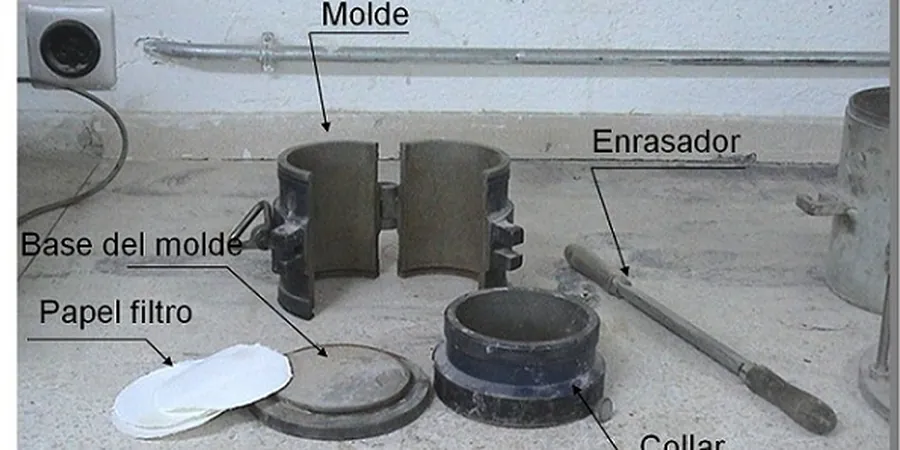
A 4.5 kg rammer dropping 450 mm onto soil in a steel mould. That is the sound of a Proctor test on a Wexford morning. The crew sets up near the borrow pit, runs five moisture points, and within hours we know the maximum dry density for the fill. In Wexford town, on quay-side projects near the Slaney, we often run the standard version for silty clay. Out on the N11 or N25 road widening jobs, the Modified Proctor hammer delivers 2700 kN-m/m³ of energy. Same principle, different compactive effort. Before placing engineered fill, we also check field density with a sand cone density test to verify the contractor hit the target. The lab sits in a van, not a distant office. Results come fast because earthworks do not wait.
Compaction is 90% moisture control. Hit the wrong water content and no number of passes will meet the spec.
Local considerations
Wexford's weather is the main variable. The county gets 1000 mm of rain annually, spread across the year, with the Slaney Valley trapping moisture. A week of drizzle raises the natural water content of stockpiled fill well above optimum. Contractors compact regardless, and the result is a soft layer that fails the nuclear gauge check. Worse, in the low-lying polder soils south of Wexford Bridge, the groundwater sits just 600 mm below grade in winter. Fill placed too wet in those conditions never dries — it just remoulds under traffic. The Proctor test, repeated on the actual material arriving on site, gives the real target density, not a textbook number. Without it, the pavement layers crack within two seasons.
Frequently asked questions
What does a Proctor test cost in Wexford?
A single Proctor test (Standard or Modified) runs between €100 and €190, depending on whether it is a one-off or part of a larger earthworks testing package. Multiple points and weekend work adjust the figure.
When do I need the Modified Proctor instead of the Standard?
Modified Proctor applies to structural fill under roads, hardstands, and foundations where heavy compaction plant is used. Standard Proctor suits landscaping, agricultural bunds, and trench backfill in low-load areas.
How long until I get the result?
Same day for most jobs. Five moisture points oven-dried and plotted takes about four hours. We send the curve and the key numbers by email before the roller moves to the next lift.
Can you test material with large stones in it?
Yes, but oversize correction applies. If more than 20% is retained on the 20 mm sieve, we run a replacement procedure or switch to a larger mould per BS 1377-4. The report flags the correction clearly.
Do I need a Proctor test for a single house foundation in Wexford?
Not for the foundation itself, but you do need it for the engineered fill under the floor slab and around the perimeter drainage. The building control officer will ask for the MDD certificate before signing off the sub-base.